
How Minnesota Winter Weather & Road Salt Destroy Bare Concrete?
Minnesota winters test the limits of building materials. Pouring a new concrete driveway, patio, or garage floor represents a significant financial investment. Bare concrete surfaces face severe stress from low temperatures, heavy snowfalls, and aggressive ice management chemicals. Homeowners frequently observe their outdoor spaces degrading after just a few seasons. Recognizing the physical mechanics behind this wear helps property owners take effective steps to protect their property. Properly sealed concrete provides years of dependable service.
The Mechanics of Freeze and Thaw
The physical properties of concrete make it vulnerable to specific weather patterns. Concrete is a porous material by nature. It acts like a rigid sponge. The surface absorbs water from melting snow, spring rain, and morning dew. Problems begin when the ambient temperature drops below freezing. Water expands by roughly nine percent when it turns into solid ice. This physical expansion creates immense internal pressure inside the concrete slab.
Minnesota experiences dozens of temperature fluctuations across the freezing mark each winter. During the daylight hours, sunlight warms the slab and melts surface ice into liquid water. This water seeps into the microscopic voids of the bare concrete. At night, the temperature drops rapidly. The trapped water freezes and forces the concrete pores open slightly wider. Each cycle compounds the internal stress. Eventually, the structural bonds of the cement paste break apart completely. Contractors and experienced homeowners on local building forums point to this specific cycle as the primary cause of early surface failure. Shielding the concrete from moisture absorption stops this cycle at the source.
How Deicing Chemicals Accelerate Wear
Municipalities and homeowners apply various deicing chemicals to melt dangerous ice. Rock salt, or sodium chloride, is the most common and inexpensive option. This creates a liquid brine that makes driving and walking safer. The chemical process introduces severe complications for bare concrete slabs.
Salt is highly hygroscopic. It actively attracts and retains moisture from the surrounding environment. When a chemical brine sits on an untreated slab, the concrete absorbs a higher volume of water than it would from regular melting snow. The salty liquid penetrates deeper into the structure of the slab.
Different deicing agents cause different problems. Calcium chloride and magnesium chloride melt ice at much lower temperatures than standard rock salt. Discussions among snow removal professionals on YouTube reveal that these chemicals keep moisture in a liquid state longer. This allows the fluid to soak deeper into the driveway.
The melted brine will eventually refreeze when temperatures plunge significantly below zero degrees Fahrenheit. Because the salt lowers the freezing point, the concrete experiences more frequent temperature transitions. A treated slab might freeze and thaw three times a week instead of just once. Coating surfaces with protective materials blocks these chemicals from entering the pores entirely.
Surface Damage and Garage Floor Challenges
The continuous pressure from ice and salt leads to highly visible surface damage. Scaling and spalling are the technical terms for this degradation. Homeowners generally describe this damage as pitting, flaking, or chipping. The top layer of the slab simply detaches from the main body of the concrete.
The finishing process of a concrete pour brings water and fine sand to the surface. This makes the uppermost layer the weakest part of the entire slab. When internal freezing pressure builds, this thin top layer pops off under the strain. Small circular pits appear first. These small voids collect even more water and salt during the next storm. The damage spreads outward rapidly from these initial weak points.
Observations from home improvement subreddits highlight that garage floors suffer heavily from winter weather. Cars pack snow, ice, and road salt into their wheel wells during daily commutes. Parked in a slightly warmer garage, this heavy mixture melts directly onto the bare concrete floor. The resulting concentrated brine sits on the surface for days at a time. Applying an impermeable floor coating keeps this harsh mixture safely on top of the floor for easy removal.
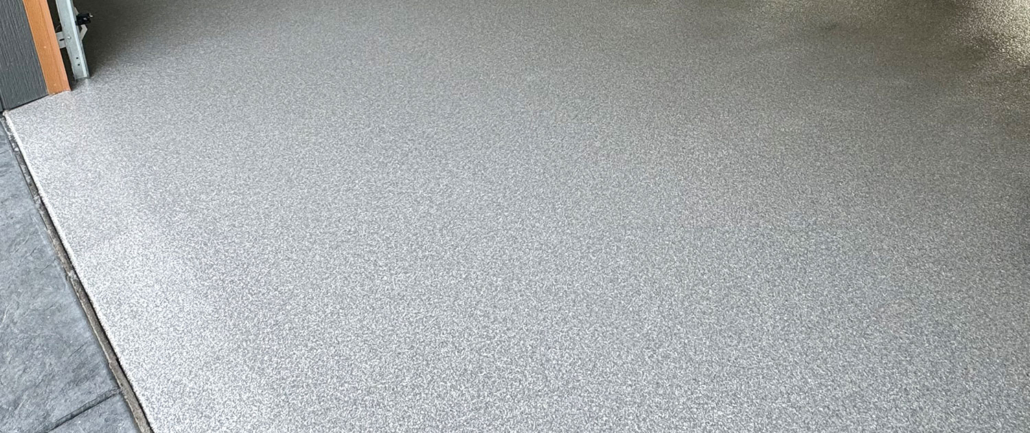
Maintaining a bare concrete garage floor during a Minnesota winter is extremely difficult. The porous surface stains easily from dirty slush and automotive fluids. Sweeping wet, salty sludge off bare cement is frustrating because the liquid settles into the rough texture. Homeowners with coated floors share a much different experience on community message boards. A sealed polyaspartic floor turns a porous slab into a smooth, waterproof barrier. Residents simply use a standard rubber foam squeegee to push the melted snow and salt brine out the garage door. The chemical mixture never penetrates the floor. The cleanup process takes minutes rather than hours, leaving the space clean and dry.
Internal Structural Risks
Many exterior concrete slabs contain steel reinforcement. Builders use rebar or welded wire mesh to provide structural strength. This metal framework keeps regular shrinkage cracks from spreading. Bare concrete allows saltwater to reach this internal steel over several years.
When sodium chloride reaches bare steel, oxidation occurs rapidly. The steel begins to rust and degrade. Rust occupies more physical space than solid metal. As the steel expands inside the slab, it pushes upward against the surrounding concrete. This pressure causes larger structural cracks and massive surface blowouts. Professional masons routinely note that stopping water at the surface is the most reliable method to protect internal reinforcements. Creating a strong surface barrier preserves the structural integrity of the driveway or patio.
Protective Solutions and Restoration
Leaving concrete bare in Minnesota is an unnecessary risk for any property owner. People have several reliable methods to protect their slabs. Regular maintenance greatly extends the useful life of any exterior surface. Taking preventative action is far less expensive than pouring a brand new slab.
Penetrating sealers offer a basic level of defense for fresh concrete. These liquid applications soak into the top layer of pores and block water absorption. They do not alter the appearance or texture of the slab. Users on regional maintenance boards report that these water-repellent sealers require reapplication every few years to remain effective.
Film-forming coatings provide a much stronger, permanent barrier. Epoxy and polyaspartic resin systems create a hard, durable shell over the concrete. These professional grade systems completely block moisture, salt, and automotive fluids from touching the bare cement. They improve the visual appeal of the space while adding necessary slip resistance.
Even if winter damage has already started, full replacement is rarely the only option. Advanced resurfacing systems offer a practical, cost-effective fix for pitted and scaling concrete. Proper evaluation by a technician determines the best approach for each individual property.
Contractors use specialized heavy grinders to remove the damaged, failing top layer of the slab. This aggressive preparation process exposes the solid, undamaged concrete underneath. Technicians then fill existing pits, spalls, and cracks with rapid-curing mending materials. This step restores a perfectly flat, stable profile to the floor.
Finally, a commercial-grade coating is applied to the freshly prepared surface. This new liquid layer binds permanently to the raw concrete below. The final result is a pristine surface completely sealed against future winter damage. Homeowners benefit from a highly durable floor that easily withstands local weather extremes for decades.
Ready to Upgrade Your Floor?
Protect your concrete before the damage starts. Get connected with Minnesota's preferred floor coating specialists.
Request a Free Estimate →